
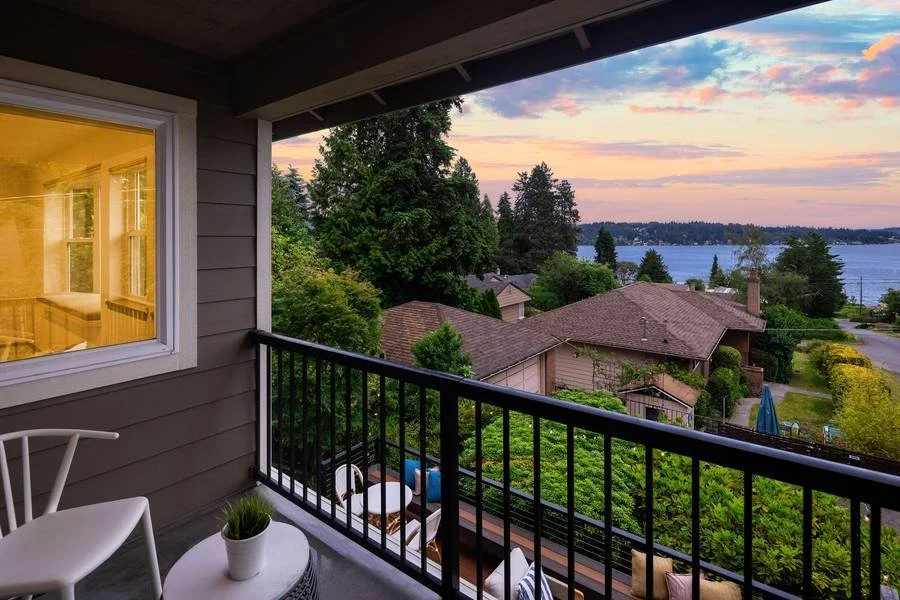
Buy first
Best when savings, equity or a bridge loan covers the next down payment.
- You get
- One move, and your home sells empty and staged.
- Plan for
- A few weeks or months of two payments.

Two homes,
one calm plan.
Buy first, sell first, or close days apart. Brian Huie plans the gap between your two homes before anything is signed.
Brian Huie, Principal Broker and Realtor, Compass · Updated October 2026

The short answer
Yes. About 7 in 10 sellers also buy a home1. There are three ways to do it: buy first, sell first, or close both a few days apart. The right one depends on whether you need your sale money for the next down payment and whether you can carry two payments for a while.
Sellers who also bought, by path
Three paths
Best when savings, equity or a bridge loan covers the next down payment.
Best when the sale funds the next home and two payments are not an option.

Best when you need the sale money and want to move once.
What people worry about
Plan the gap first: closings days apart, a short rent-back, or buy first and move once.2
Your lender shows what you qualify for with both, and whether a bridge loan fits.
Set the plan B before you buy: price, timing, or renting it out.
Often, in a busy market. Timing the offer well is what makes it compete.3
Some terms put earnest money at risk if your sale slips. Know which before you sign.
Not usually. Buying first or closing days apart means one move.
Find your path
Do you need your sale money for the next down payment?
Could you carry both payments for a few months?
Does moving only once matter to you?
A likely fit
Buy first
Talk it through with BrianA starting point, not advice. Your lender confirms what you qualify for.
Brian's clients get the full playbook: timing rules, offer terms and money moves.
Open the client sectionClosing days apart
An example. The next home goes under contract about two weeks before your sale closes, then closes a few days after it.
Brian's view
From Brian's clients
Ballard family, 2026
They bought first, moved out, then prepped and staged the empty house.
Relocating family, 2026
Sold out of state first with a fully underwritten loan, so their Bellevue offer could compete with cash.
Growing families, 2024 to 2026
Bought a larger home first, then listed the townhome or condo empty weeks or months later.

Up from 2.9 a year earlier. More choice gives a contingent offer a better chance, and can mean a longer sale. Both change which path fits.
Questions
It depends on whether you need the sale money for the down payment and whether you can carry two payments for a while. Selling first gives a firm budget and no overlap; buying first gives one move and an empty home to prepare and stage. Brian compares both with your lender's numbers.
Yes. Common ways are savings or equity for the down payment, a bridge loan, a buy-before-you-sell program, or a home equity line opened before your home is listed. Your lender confirms which you qualify for.
It is an offer that depends on selling your current home, usually written with NWMLS Form 22B. The seller can keep marketing the home, and if a backup offer arrives you get a short window to remove the contingency or step aside.
A short-term loan against your current home's equity that helps fund the next purchase before the sale closes. Rates often run from prime to about prime plus two points, with terms of about 6 to 12 months.6
An agreement that lets you stay in the home you sold after closing, as a tenant of the buyer. In Washington it is written on NWMLS Form 65B for up to three months.7
A common plan puts the next home under contract about two weeks before your sale closes, then closes the purchase a few business days after the sale.
An empty home is easier to prepare, show and photograph, but bare rooms can sell for less. Staging is what makes a vacant home work.4
Often, with a mortgage recast: you pay a lump sum toward the loan and the lender recalculates the payment. Fees usually run about $150 to $500, and most government-backed loans can't be recast.8
Yes, and most repeat buyers do. Money from the sale is released at closing, so the purchase closes on or after that day, or a bridge loan covers the gap if you buy first.9
Clients only
The timing rules, offer terms and money moves Brian uses with his own clients. Clients get a code from Brian.
Clients only
Next step
A short call covers your timing, your lender's numbers and which path fits. Or text Brian at 206.708.9699.
Sources

Brian Huie of Compass Real Estate - 837 N 34th Street, Fremont, Seattle, WA 98103
All information contained herein is deemed reliable but is subject to verification by the purchaser and the brokers represented by this website assume no responsibility for the correctness thereof. In accordance with the law, these properties and services presented here are offered without respect to race, gender, color, creed, familial status, national origin, or handicaps.